Buy حم.com ?
We are moving the project
حم.com .
Are you interested in purchasing the domain
حم.com ?
domain@kv-gmbh.de · 0541-91531010
Buy حم.com ?
When is it spelled tzt and when is it spelled tzst?
The spelling "tzt" is used when the sound is a voiceless alveolar affricate, like in the word "pizza." On the other hand, the spelling "tzst" is used when the sound is a voiceless alveolar sibilant affricate, like in the word "cats." The addition of the "s" in "tzst" indicates the presence of the sibilant sound. **
When do you use 'tzt' and when do you use 'tzst'?
The suffix 'tzt' is used to form the present tense of regular verbs in the third person singular (he, she, it) in German. For example, "er spielt" (he plays). On the other hand, the suffix 'tzst' is not a standard suffix in German grammar. It is likely a typographical error or a misspelling. **


Similar search terms for Tzt
Top-Angebote
Products related to Tzt:
-
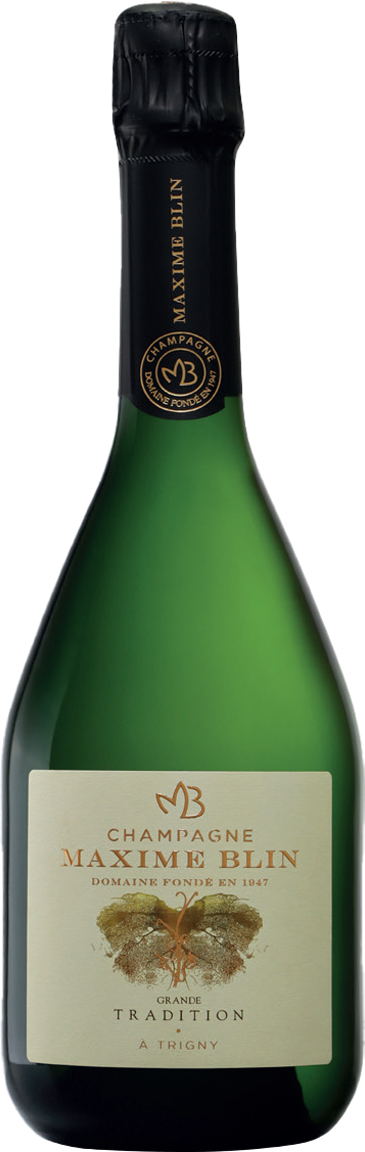
Champagne Brut 'Grande Tradition' Maxime BlinThe 'Grande Tradition' Brut Champagne from the French company Maxime Blin is a Champagne with a classic and refined style, reflecting the identity of the winery. This label is part of the 'Les Fondamentales' collection, a selection that brings together historical cuvées that fully embody the style of the Blin family, each focusing on a specific grape variety. In this particular case, the 'Grande Tradition' highlights the qualities of the Chardonnay cultivated in the Trigny area.The 'Grande Tradition' Maxime Blin Champagne comes from a blend of Chardonnay (90%) and Pinot Noir (10%) grapes grown under certified organic cultivation in the village of Trigny, within the Montagne de Reims area. Here, the vines enjoy excellent southern and south-eastern exposure and the sandy, clay-limestone soil matrix. Following the harvest, the grapes are subjected to a gentle pressing using a Coquard press, with the must thus obtained being transferred to stainless steel tanks for temperature-controlled alcoholic fermentation and subsequent complete malolactic fermentation. The vintage wine is then combined with 30% vins de réserve before bottle fermentation according to the Champenoise Method, combined with 36 months of maturation sur lattes. This is followed by dégorgement and final dosage as Extra Brut, with 4 g/l residual sugar.The 'Grande Tradition' Champagne Maxime Blin has a luminous straw yellow colour with a fine and persistent perlage. The aromatic bouquet expresses fragrant scents of citrus fruits and white flowers, surrounded by memories of bakery and mineral nuances. The taste is fresh, elegant and balanced, with a pleasant savoury trail that rests on a long citrus and mineral finish.57,00 £*Shipping: 48,00 £Secure redirect to the provider
-
Les Jardins LED path light Tradition Sensor Corten 90cm Tradition, dimmable, Brown / rust, Aluminium, Modern, outdoor solar lightsThe LED path light Tradition made of aluminum shows a modern cuboid shape and rust-brown corten steel finish. It can be operated autonomously thanks to equipment with solar module, rechargeable battery and motion sensor.- equipped with dimming function- operating time when fully charged: 5 h to 200 h (depending on light output)- protection class: IP66- alternatively rechargeable via USB connection- via ground spike (included) or permanently installable398,43 £*Shipping: 4,99 £Secure redirect to the provider
-
NCAA School Tradition Silk Touch Throw Blanket"Wrap yourself in the essence of team spirit with our NCAA ""School Tradition"" Silky Soft Silk Touch Blanket. Crafted from 100% polyester, this blanket offers a luxurious and smooth touch that's ideal for showcasing your unwavering loyalty."41,49 $*Shipping: 0,00 $Secure redirect to the provider



-
Why is "Arzt" written with "zt" and "sitzt" or "jetzt" with "tzt"?
The reason for the difference in spelling between "Arzt" and "sitzt" or "jetzt" lies in the pronunciation of the words. In German, when the sound /ts/ occurs at the beginning of a syllable, it is spelled with "zt" as in "Arzt." However, when the sound /ts/ occurs at the end of a syllable, it is spelled with "tzt" as in "sitzt" or "jetzt." This spelling rule helps to accurately represent the pronunciation of these words in written form. **
-
Why is "Arzt" spelled with "zt" and "sitzt" or "jetzt" with "tzt"?
The spelling of words like "Arzt" with "zt" and "sitzt" or "jetzt" with "tzt" is due to the rules of German orthography. In German, when a short vowel is followed by the consonants "z" or "s," the consonant sound is doubled. This rule helps to maintain consistency in the pronunciation of words and differentiate between similar words. Therefore, the spelling of these words reflects the pronunciation of the consonant sounds in relation to the preceding vowel. **
-
Why is "Arzt" spelled with "zt" and "sitzt" or "jetzt" spelled with "tzt"?
The spelling difference between "Arzt" and words like "sitzt" or "jetzt" is due to the pronunciation of the letter "z" in German. In "Arzt," the "z" is pronounced as a voiceless sound, similar to the English "ts" sound. Therefore, it is spelled with "zt" to reflect this pronunciation. In words like "sitzt" or "jetzt," the "z" is pronounced as a voiced sound, similar to the English "z" sound, so it is spelled with "tzt" to reflect this pronunciation. **
-
Why is "Arzt" written with "zt" and "sitzt" or "jetzt" written with "tzt"?
The spelling difference between "Arzt" and "sitzt" or "jetzt" is due to the pronunciation of the words. In German, when the sound "ts" is followed by a short vowel, it is spelled with "zt" (as in "Arzt"). However, when the sound "ts" is followed by a long vowel or a diphthong, it is spelled with "tzt" (as in "sitzt" or "jetzt"). This spelling rule helps to accurately represent the pronunciation of these words in written form. **

How can one forget culture and heritage?
One can forget culture and heritage by not actively engaging with it, by being disconnected from one's roots and community, and by prioritizing other aspects of life over preserving and celebrating one's cultural identity. This can happen through assimilation into a different culture, lack of exposure to one's own cultural traditions and practices, and a lack of interest in learning about one's heritage. Additionally, societal pressures and discrimination can also contribute to the erasure of one's culture and heritage. **
What is the difference between culture and tradition?
Culture refers to the beliefs, customs, arts, and social behaviors of a particular group of people, encompassing a broader range of practices and values. On the other hand, tradition specifically refers to the customs and practices that are passed down from generation to generation within a specific community or society. While culture is more dynamic and can evolve over time, traditions tend to be more static and rooted in history and heritage. **
Top-Angebote
Products related to Tzt:
-
RLF Home Tradition Provance Valance"Fits Windows up to 50""W. Use multiples for Wider Windows. Decorator's quality fabrics. Fully lined with Poly/Cotton Ivory lining. Use a 2-1/2"" Continental Rod, a regular 3/4"" Curtain rod, Tension rod or Decorative pole no more than 1-3/8"" Diameter."64,49 $*Shipping: 0,00 $Secure redirect to the provider
-
Champagne Brut 'Grande Tradition' Maxime BlinThe 'Grande Tradition' Brut Champagne from the French company Maxime Blin is a Champagne with a classic and refined style, reflecting the identity of the winery. This label is part of the 'Les Fondamentales' collection, a selection that brings together historical cuvées that fully embody the style of the Blin family, each focusing on a specific grape variety. In this particular case, the 'Grande Tradition' highlights the qualities of the Chardonnay cultivated in the Trigny area.The 'Grande Tradition' Maxime Blin Champagne comes from a blend of Chardonnay (90%) and Pinot Noir (10%) grapes grown under certified organic cultivation in the village of Trigny, within the Montagne de Reims area. Here, the vines enjoy excellent southern and south-eastern exposure and the sandy, clay-limestone soil matrix. Following the harvest, the grapes are subjected to a gentle pressing using a Coquard press, with the must thus obtained being transferred to stainless steel tanks for temperature-controlled alcoholic fermentation and subsequent complete malolactic fermentation. The vintage wine is then combined with 30% vins de réserve before bottle fermentation according to the Champenoise Method, combined with 36 months of maturation sur lattes. This is followed by dégorgement and final dosage as Extra Brut, with 4 g/l residual sugar.The 'Grande Tradition' Champagne Maxime Blin has a luminous straw yellow colour with a fine and persistent perlage. The aromatic bouquet expresses fragrant scents of citrus fruits and white flowers, surrounded by memories of bakery and mineral nuances. The taste is fresh, elegant and balanced, with a pleasant savoury trail that rests on a long citrus and mineral finish.57,00 £*Shipping: 48,00 £Secure redirect to the provider
-
When is it spelled tzt and when is it spelled tzst?
The spelling "tzt" is used when the sound is a voiceless alveolar affricate, like in the word "pizza." On the other hand, the spelling "tzst" is used when the sound is a voiceless alveolar sibilant affricate, like in the word "cats." The addition of the "s" in "tzst" indicates the presence of the sibilant sound. **
-
When do you use 'tzt' and when do you use 'tzst'?
The suffix 'tzt' is used to form the present tense of regular verbs in the third person singular (he, she, it) in German. For example, "er spielt" (he plays). On the other hand, the suffix 'tzst' is not a standard suffix in German grammar. It is likely a typographical error or a misspelling. **
-
Why is "Arzt" written with "zt" and "sitzt" or "jetzt" with "tzt"?
The reason for the difference in spelling between "Arzt" and "sitzt" or "jetzt" lies in the pronunciation of the words. In German, when the sound /ts/ occurs at the beginning of a syllable, it is spelled with "zt" as in "Arzt." However, when the sound /ts/ occurs at the end of a syllable, it is spelled with "tzt" as in "sitzt" or "jetzt." This spelling rule helps to accurately represent the pronunciation of these words in written form. **
-
Why is "Arzt" spelled with "zt" and "sitzt" or "jetzt" with "tzt"?
The spelling of words like "Arzt" with "zt" and "sitzt" or "jetzt" with "tzt" is due to the rules of German orthography. In German, when a short vowel is followed by the consonants "z" or "s," the consonant sound is doubled. This rule helps to maintain consistency in the pronunciation of words and differentiate between similar words. Therefore, the spelling of these words reflects the pronunciation of the consonant sounds in relation to the preceding vowel. **
Similar search terms for Tzt
-
Les Jardins LED path light Tradition Sensor Corten 90cm Tradition, dimmable, Brown / rust, Aluminium, Modern, outdoor solar lightsThe LED path light Tradition made of aluminum shows a modern cuboid shape and rust-brown corten steel finish. It can be operated autonomously thanks to equipment with solar module, rechargeable battery and motion sensor.- equipped with dimming function- operating time when fully charged: 5 h to 200 h (depending on light output)- protection class: IP66- alternatively rechargeable via USB connection- via ground spike (included) or permanently installable398,43 £*Shipping: 4,99 £Secure redirect to the provider
-
NCAA School Tradition Silk Touch Throw Blanket"Wrap yourself in the essence of team spirit with our NCAA ""School Tradition"" Silky Soft Silk Touch Blanket. Crafted from 100% polyester, this blanket offers a luxurious and smooth touch that's ideal for showcasing your unwavering loyalty."41,49 $*Shipping: 0,00 $Secure redirect to the provider
-
Why is "Arzt" spelled with "zt" and "sitzt" or "jetzt" spelled with "tzt"?
The spelling difference between "Arzt" and words like "sitzt" or "jetzt" is due to the pronunciation of the letter "z" in German. In "Arzt," the "z" is pronounced as a voiceless sound, similar to the English "ts" sound. Therefore, it is spelled with "zt" to reflect this pronunciation. In words like "sitzt" or "jetzt," the "z" is pronounced as a voiced sound, similar to the English "z" sound, so it is spelled with "tzt" to reflect this pronunciation. **
-
Why is "Arzt" written with "zt" and "sitzt" or "jetzt" written with "tzt"?
The spelling difference between "Arzt" and "sitzt" or "jetzt" is due to the pronunciation of the words. In German, when the sound "ts" is followed by a short vowel, it is spelled with "zt" (as in "Arzt"). However, when the sound "ts" is followed by a long vowel or a diphthong, it is spelled with "tzt" (as in "sitzt" or "jetzt"). This spelling rule helps to accurately represent the pronunciation of these words in written form. **
-
How can one forget culture and heritage?
One can forget culture and heritage by not actively engaging with it, by being disconnected from one's roots and community, and by prioritizing other aspects of life over preserving and celebrating one's cultural identity. This can happen through assimilation into a different culture, lack of exposure to one's own cultural traditions and practices, and a lack of interest in learning about one's heritage. Additionally, societal pressures and discrimination can also contribute to the erasure of one's culture and heritage. **
-
What is the difference between culture and tradition?
Culture refers to the beliefs, customs, arts, and social behaviors of a particular group of people, encompassing a broader range of practices and values. On the other hand, tradition specifically refers to the customs and practices that are passed down from generation to generation within a specific community or society. While culture is more dynamic and can evolve over time, traditions tend to be more static and rooted in history and heritage. **
* All prices are inclusive of VAT and, if applicable, plus shipping costs. The offer information is based on the details provided by the respective shop and is updated through automated processes. Real-time updates do not occur, so deviations can occur in individual cases. ** Note: Parts of this content were created by AI.