Buy حم.com ?
We are moving the project
حم.com .
Are you interested in purchasing the domain
حم.com ?
domain@kv-gmbh.de · 0541-91531010
Buy حم.com ?
What were the trenches in World War I?
The trenches in World War I were long, narrow ditches dug into the ground for soldiers to seek cover and protection from enemy fire. They stretched for miles across the Western Front and were filled with mud, water, and disease. Soldiers lived and fought in these harsh conditions for years, facing constant danger and hardship. The trenches became symbolic of the brutal and stagnant nature of trench warfare during World War I. **
Why are soldiers in trenches always so exposed?
Soldiers in trenches are often exposed because the nature of trench warfare requires them to be close to the front lines, where they are vulnerable to enemy fire. Trenches are designed to provide cover and protection, but they are also limited in space and can become crowded, making it difficult for soldiers to find adequate cover. Additionally, the topography of the land and the layout of the trenches may not always provide complete protection from enemy fire, leaving soldiers exposed to potential danger. **


Similar search terms for Trenches
Top-Angebote
Products related to Trenches:
-
Les Jardins LED path light Tradition Sensor Corten 90cm Tradition, dimmable, Brown / rust, Aluminium, Modern, outdoor solar lightsThe LED path light Tradition made of aluminum shows a modern cuboid shape and rust-brown corten steel finish. It can be operated autonomously thanks to equipment with solar module, rechargeable battery and motion sensor.- equipped with dimming function- operating time when fully charged: 5 h to 200 h (depending on light output)- protection class: IP66- alternatively rechargeable via USB connection- via ground spike (included) or permanently installable398,43 £*Shipping: 4,99 £Secure redirect to the provider
-
Novica Handmade Tradition Of The Heart Basalt BowlPrepare herbs, spices and sauces the way our ancestors did--with handmade stone tools. The Comonfort Group presents this heart-shaped basalt bowl, crafted by hand in a labor-intensive process.132,98 $*Shipping: 0,00 $Secure redirect to the provider
-
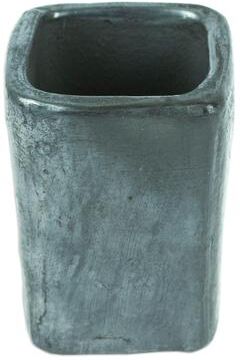
Novida Novica Handmade Festive Tradition Barro Negro Shot GlassMexico's Fernando and Magali Pedro craft a unique creation from traditional barro negro ceramic. After a long and detailed process, this high-quality shot glass is ready to be that elegant item you need for your parties.28,48 $*Shipping: 0,00 $Secure redirect to the provider


-
How does a submersible pump work for irrigating a garden with trenches?
A submersible pump works by being placed underwater in a trench or water source, such as a well or reservoir. The pump is then connected to a hose or pipe that carries the water to the garden for irrigation. When the pump is turned on, it uses a motor to draw water from the source and push it through the hose to the garden. This allows for efficient and consistent watering of the garden, as the pump can be placed directly in the water source and does not require manual filling or priming. **
-
How does a submersible pump work for watering a garden with trenches?
A submersible pump works by being placed underwater in a trench or water source, such as a well or pond. The pump then uses an impeller to draw water in and push it through a hose or pipe to the desired location, such as a garden. The pump can be connected to a timer or sensor to automatically water the garden at specific times or when the soil moisture levels are low. This method is efficient for watering gardens with trenches as it allows for a consistent and controlled flow of water directly to the roots of the plants. **
-
Has the previous course of the Ukraine war been influenced by trenches?
Yes, the previous course of the Ukraine war has been influenced by trenches. Trench warfare has been a significant feature of the conflict, with both sides digging extensive networks of trenches to defend their positions and launch offensives. These trenches have slowed down the movement of troops and made it difficult for either side to make significant advances. The presence of trenches has also led to a stalemate in some areas, with neither side able to gain a decisive advantage. Overall, the use of trenches has had a significant impact on the course of the Ukraine war. **
-
Why were flares shot up in the trenches during the First World War?
Flares were shot up in the trenches during the First World War for several reasons. One of the main reasons was to signal for help or to communicate with nearby units. Flares were also used to illuminate the battlefield at night, allowing soldiers to see enemy movements or to provide light for carrying out tasks. Additionally, different colored flares were used to indicate different messages, such as calling for a medic or signaling an impending attack. Overall, flares played a crucial role in communication and visibility in the challenging conditions of trench warfare. **


How can one forget culture and heritage?
One can forget culture and heritage by not actively engaging with it, by being disconnected from one's roots and community, and by prioritizing other aspects of life over preserving and celebrating one's cultural identity. This can happen through assimilation into a different culture, lack of exposure to one's own cultural traditions and practices, and a lack of interest in learning about one's heritage. Additionally, societal pressures and discrimination can also contribute to the erasure of one's culture and heritage. **
What do the oceans and deep-sea trenches look like on a geographical map?
On a geographical map, the oceans are typically depicted as large, continuous bodies of water, often shaded in blue. Deep-sea trenches, which are the deepest parts of the ocean floor, are usually represented as narrow, elongated depressions in the ocean floor. These trenches are often located near tectonic plate boundaries and can be thousands of meters deep. Overall, the oceans and deep-sea trenches are shown as distinct features on geographical maps, highlighting the vastness and complexity of the Earth's underwater terrain. **
Top-Angebote
Products related to Trenches:
-
RLF Home Tradition Provance Valance"Fits Windows up to 50""W. Use multiples for Wider Windows. Decorator's quality fabrics. Fully lined with Poly/Cotton Ivory lining. Use a 2-1/2"" Continental Rod, a regular 3/4"" Curtain rod, Tension rod or Decorative pole no more than 1-3/8"" Diameter."64,49 $*Shipping: 0,00 $Secure redirect to the provider
-
Les Jardins LED path light Tradition Sensor Corten 90cm Tradition, dimmable, Brown / rust, Aluminium, Modern, outdoor solar lightsThe LED path light Tradition made of aluminum shows a modern cuboid shape and rust-brown corten steel finish. It can be operated autonomously thanks to equipment with solar module, rechargeable battery and motion sensor.- equipped with dimming function- operating time when fully charged: 5 h to 200 h (depending on light output)- protection class: IP66- alternatively rechargeable via USB connection- via ground spike (included) or permanently installable398,43 £*Shipping: 4,99 £Secure redirect to the provider
-
Novica Handmade Tradition Of The Heart Basalt BowlPrepare herbs, spices and sauces the way our ancestors did--with handmade stone tools. The Comonfort Group presents this heart-shaped basalt bowl, crafted by hand in a labor-intensive process.132,98 $*Shipping: 0,00 $Secure redirect to the provider
-
What were the trenches in World War I?
The trenches in World War I were long, narrow ditches dug into the ground for soldiers to seek cover and protection from enemy fire. They stretched for miles across the Western Front and were filled with mud, water, and disease. Soldiers lived and fought in these harsh conditions for years, facing constant danger and hardship. The trenches became symbolic of the brutal and stagnant nature of trench warfare during World War I. **
-
Why are soldiers in trenches always so exposed?
Soldiers in trenches are often exposed because the nature of trench warfare requires them to be close to the front lines, where they are vulnerable to enemy fire. Trenches are designed to provide cover and protection, but they are also limited in space and can become crowded, making it difficult for soldiers to find adequate cover. Additionally, the topography of the land and the layout of the trenches may not always provide complete protection from enemy fire, leaving soldiers exposed to potential danger. **
-
How does a submersible pump work for irrigating a garden with trenches?
A submersible pump works by being placed underwater in a trench or water source, such as a well or reservoir. The pump is then connected to a hose or pipe that carries the water to the garden for irrigation. When the pump is turned on, it uses a motor to draw water from the source and push it through the hose to the garden. This allows for efficient and consistent watering of the garden, as the pump can be placed directly in the water source and does not require manual filling or priming. **
-
How does a submersible pump work for watering a garden with trenches?
A submersible pump works by being placed underwater in a trench or water source, such as a well or pond. The pump then uses an impeller to draw water in and push it through a hose or pipe to the desired location, such as a garden. The pump can be connected to a timer or sensor to automatically water the garden at specific times or when the soil moisture levels are low. This method is efficient for watering gardens with trenches as it allows for a consistent and controlled flow of water directly to the roots of the plants. **
Similar search terms for Trenches
-
Novida Novica Handmade Festive Tradition Barro Negro Shot GlassMexico's Fernando and Magali Pedro craft a unique creation from traditional barro negro ceramic. After a long and detailed process, this high-quality shot glass is ready to be that elegant item you need for your parties.28,48 $*Shipping: 0,00 $Secure redirect to the provider
-
Everyday Crate Smart Azan Prayer Clock With Hijri Calendar, Temperature Display & Dual Language Alarm Smart Azan Prayer Clock With Hijri Calendar, Temperature Display & Dual Language AlarmFeel confident knowing every prayer time is right at your fingertips. This Azan clock is designed for Muslims who want a simple, reliable way to stay connected to daily prayers while keeping track of time, date, and temperature. Featuring automatic...49,97 $*Shipping: 0,00 $Secure redirect to the provider
-
KC Cubs: Educational Rug: ABC Alphabet ASL Sign Language, 5x7' PlaymatKC CUBS 5X7 ABC ALPHABET ASL SIGN LANGUAGE RUG - Introduce your child to the world of American Sign Language (ASL) in the most colorful and engaging way with the KC Cubs ASL Alphabet Educational Rug.81,99 $*Shipping: 0,00 $Secure redirect to the provider
-
Has the previous course of the Ukraine war been influenced by trenches?
Yes, the previous course of the Ukraine war has been influenced by trenches. Trench warfare has been a significant feature of the conflict, with both sides digging extensive networks of trenches to defend their positions and launch offensives. These trenches have slowed down the movement of troops and made it difficult for either side to make significant advances. The presence of trenches has also led to a stalemate in some areas, with neither side able to gain a decisive advantage. Overall, the use of trenches has had a significant impact on the course of the Ukraine war. **
-
Why were flares shot up in the trenches during the First World War?
Flares were shot up in the trenches during the First World War for several reasons. One of the main reasons was to signal for help or to communicate with nearby units. Flares were also used to illuminate the battlefield at night, allowing soldiers to see enemy movements or to provide light for carrying out tasks. Additionally, different colored flares were used to indicate different messages, such as calling for a medic or signaling an impending attack. Overall, flares played a crucial role in communication and visibility in the challenging conditions of trench warfare. **
-
How can one forget culture and heritage?
One can forget culture and heritage by not actively engaging with it, by being disconnected from one's roots and community, and by prioritizing other aspects of life over preserving and celebrating one's cultural identity. This can happen through assimilation into a different culture, lack of exposure to one's own cultural traditions and practices, and a lack of interest in learning about one's heritage. Additionally, societal pressures and discrimination can also contribute to the erasure of one's culture and heritage. **
-
What do the oceans and deep-sea trenches look like on a geographical map?
On a geographical map, the oceans are typically depicted as large, continuous bodies of water, often shaded in blue. Deep-sea trenches, which are the deepest parts of the ocean floor, are usually represented as narrow, elongated depressions in the ocean floor. These trenches are often located near tectonic plate boundaries and can be thousands of meters deep. Overall, the oceans and deep-sea trenches are shown as distinct features on geographical maps, highlighting the vastness and complexity of the Earth's underwater terrain. **
* All prices are inclusive of VAT and, if applicable, plus shipping costs. The offer information is based on the details provided by the respective shop and is updated through automated processes. Real-time updates do not occur, so deviations can occur in individual cases. ** Note: Parts of this content were created by AI.