Buy حم.com ?
We are moving the project
حم.com .
Are you interested in purchasing the domain
حم.com ?
domain@kv-gmbh.de · 0541-91531010
Buy حم.com ?
Why do we need injectivity, surjectivity, or bijectivity?
Injectivity, surjectivity, and bijectivity are important concepts in mathematics because they help us understand the relationship between different sets and functions. Injectivity ensures that each element in the domain maps to a unique element in the codomain, which is useful for preventing information loss in functions. Surjectivity guarantees that every element in the codomain is mapped to by at least one element in the domain, ensuring that no information is left out. Bijectivity combines these two properties, providing a one-to-one correspondence between elements in the domain and codomain, making it easier to establish relationships and solve problems in various mathematical contexts. **
How can one show and justify the bijectivity?
One can show and justify the bijectivity of a function by demonstrating that it is both injective and surjective. Injectivity means that each element in the domain maps to a unique element in the codomain, while surjectivity means that every element in the codomain is mapped to by at least one element in the domain. By proving both of these properties, one can establish that the function is bijective, meaning it has a one-to-one correspondence between its domain and codomain. This can be done through mathematical proofs, such as using the definition of injectivity and surjectivity, or by showing the existence of an inverse function. **


Similar search terms for Bijectivity
Top-Angebote
Products related to Bijectivity:
-
Les Jardins LED path light Tradition Sensor Corten 90cm Tradition, dimmable, Brown / rust, Aluminium, Modern, outdoor solar lightsThe LED path light Tradition made of aluminum shows a modern cuboid shape and rust-brown corten steel finish. It can be operated autonomously thanks to equipment with solar module, rechargeable battery and motion sensor.- equipped with dimming function- operating time when fully charged: 5 h to 200 h (depending on light output)- protection class: IP66- alternatively rechargeable via USB connection- via ground spike (included) or permanently installable398,43 £*Shipping: 4,99 £Secure redirect to the provider
-
Monika Blunder Beauty Body Language Botanical Oil 100mLA body oil for dull skin. Intense hydration: Almond, Rosehip, and Marula Oils quench dryness. Natural luminosity: Meadowfoam oil gives skin a dewy sheen. Antioxidant protection: Edelweiss Extract defends against free radicals. Soft, supple skin: Arnica maintains skin's softness and suppleness. Transform your skin with Body Language Oil —a luxurious blend of nourishing oils and potent antioxidants.54,73 £*Shipping: 7,11 £Secure redirect to the provider
-
Novica Handmade Tradition Of The Heart Basalt BowlPrepare herbs, spices and sauces the way our ancestors did--with handmade stone tools. The Comonfort Group presents this heart-shaped basalt bowl, crafted by hand in a labor-intensive process.132,98 $*Shipping: 0,00 $Secure redirect to the provider
-
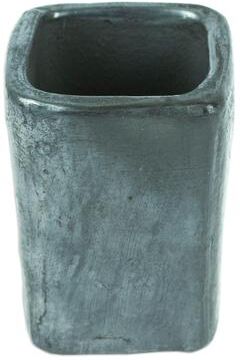
Novida Novica Handmade Festive Tradition Barro Negro Shot GlassMexico's Fernando and Magali Pedro craft a unique creation from traditional barro negro ceramic. After a long and detailed process, this high-quality shot glass is ready to be that elegant item you need for your parties.28,48 $*Shipping: 0,00 $Secure redirect to the provider



-
Examine the sets for injectivity, surjectivity, and bijectivity.
The sets can be examined for injectivity, surjectivity, and bijectivity by analyzing the relationship between the elements of the domain and the codomain. Injectivity can be determined by checking if each element in the domain maps to a unique element in the codomain. If there are no two distinct elements in the domain that map to the same element in the codomain, the function is injective. Surjectivity can be determined by checking if every element in the codomain has at least one pre-image in the domain. If every element in the codomain is mapped to by at least one element in the domain, the function is surjective. Bijectivity can be determined by checking if the function is both injective and surjective. If every element in the codomain has a unique pre-image in the domain, and every element in the codomain is mapped to, the function is bijective. **
-
What is the definition of injectivity, surjectivity, and bijectivity?
Injectivity refers to a function where each element in the domain maps to a unique element in the codomain. Surjectivity means that every element in the codomain is mapped to by at least one element in the domain. Bijectivity combines both injectivity and surjectivity, meaning that each element in the domain maps to a unique element in the codomain, and every element in the codomain is mapped to by at least one element in the domain. **
-
How do I prove injectivity, surjectivity, and bijectivity correctly?
To prove injectivity, you need to show that if f(x) = f(y), then x = y. This can be done by assuming f(x) = f(y) and then showing that x = y. To prove surjectivity, you need to show that for every y in the codomain, there exists an x in the domain such that f(x) = y. This can be done by taking an arbitrary y and finding an x that maps to it. To prove bijectivity, you need to show both injectivity and surjectivity. This can be done by proving that f is injective and surjective. **
-
How can one prove bijectivity and countability through identity?
One can prove bijectivity by showing that for every element in the domain, there is a unique corresponding element in the codomain, and vice versa. This can be done through the use of the identity function, which maps each element to itself. If the identity function can be shown to be both injective (no two distinct elements in the domain map to the same element in the codomain) and surjective (every element in the codomain is mapped to by an element in the domain), then the function is bijective. Countability can also be proven through identity by showing that a set is countable if and only if there exists a bijection between the set and the natural numbers. By constructing a bijection between a set and the natural numbers using the identity function, one can prove that the set is countable. This is because the identity function maps each element in the set to a unique natural number, demonstrating that the set can be put into one-to-one correspondence with the natural **


What is the purpose of injectivity, surjectivity, or bijectivity?
The purpose of injectivity, surjectivity, and bijectivity is to understand and describe the relationship between two sets. Injectivity ensures that each element in the domain maps to a unique element in the codomain, surjectivity ensures that every element in the codomain is mapped to by at least one element in the domain, and bijectivity combines both properties to ensure that there is a one-to-one correspondence between the elements of the domain and the codomain. These properties are important in various areas of mathematics, such as function theory, linear algebra, and set theory, and help to characterize the behavior of functions and relations between sets. **
How can one forget culture and heritage?
One can forget culture and heritage by not actively engaging with it, by being disconnected from one's roots and community, and by prioritizing other aspects of life over preserving and celebrating one's cultural identity. This can happen through assimilation into a different culture, lack of exposure to one's own cultural traditions and practices, and a lack of interest in learning about one's heritage. Additionally, societal pressures and discrimination can also contribute to the erasure of one's culture and heritage. **
Top-Angebote
Products related to Bijectivity:
-
RLF Home Tradition Provance Valance"Fits Windows up to 50""W. Use multiples for Wider Windows. Decorator's quality fabrics. Fully lined with Poly/Cotton Ivory lining. Use a 2-1/2"" Continental Rod, a regular 3/4"" Curtain rod, Tension rod or Decorative pole no more than 1-3/8"" Diameter."64,49 $*Shipping: 0,00 $Secure redirect to the provider
-
Les Jardins LED path light Tradition Sensor Corten 90cm Tradition, dimmable, Brown / rust, Aluminium, Modern, outdoor solar lightsThe LED path light Tradition made of aluminum shows a modern cuboid shape and rust-brown corten steel finish. It can be operated autonomously thanks to equipment with solar module, rechargeable battery and motion sensor.- equipped with dimming function- operating time when fully charged: 5 h to 200 h (depending on light output)- protection class: IP66- alternatively rechargeable via USB connection- via ground spike (included) or permanently installable398,43 £*Shipping: 4,99 £Secure redirect to the provider
-
Monika Blunder Beauty Body Language Botanical Oil 100mLA body oil for dull skin. Intense hydration: Almond, Rosehip, and Marula Oils quench dryness. Natural luminosity: Meadowfoam oil gives skin a dewy sheen. Antioxidant protection: Edelweiss Extract defends against free radicals. Soft, supple skin: Arnica maintains skin's softness and suppleness. Transform your skin with Body Language Oil —a luxurious blend of nourishing oils and potent antioxidants.54,73 £*Shipping: 7,11 £Secure redirect to the provider
-
Why do we need injectivity, surjectivity, or bijectivity?
Injectivity, surjectivity, and bijectivity are important concepts in mathematics because they help us understand the relationship between different sets and functions. Injectivity ensures that each element in the domain maps to a unique element in the codomain, which is useful for preventing information loss in functions. Surjectivity guarantees that every element in the codomain is mapped to by at least one element in the domain, ensuring that no information is left out. Bijectivity combines these two properties, providing a one-to-one correspondence between elements in the domain and codomain, making it easier to establish relationships and solve problems in various mathematical contexts. **
-
How can one show and justify the bijectivity?
One can show and justify the bijectivity of a function by demonstrating that it is both injective and surjective. Injectivity means that each element in the domain maps to a unique element in the codomain, while surjectivity means that every element in the codomain is mapped to by at least one element in the domain. By proving both of these properties, one can establish that the function is bijective, meaning it has a one-to-one correspondence between its domain and codomain. This can be done through mathematical proofs, such as using the definition of injectivity and surjectivity, or by showing the existence of an inverse function. **
-
Examine the sets for injectivity, surjectivity, and bijectivity.
The sets can be examined for injectivity, surjectivity, and bijectivity by analyzing the relationship between the elements of the domain and the codomain. Injectivity can be determined by checking if each element in the domain maps to a unique element in the codomain. If there are no two distinct elements in the domain that map to the same element in the codomain, the function is injective. Surjectivity can be determined by checking if every element in the codomain has at least one pre-image in the domain. If every element in the codomain is mapped to by at least one element in the domain, the function is surjective. Bijectivity can be determined by checking if the function is both injective and surjective. If every element in the codomain has a unique pre-image in the domain, and every element in the codomain is mapped to, the function is bijective. **
-
What is the definition of injectivity, surjectivity, and bijectivity?
Injectivity refers to a function where each element in the domain maps to a unique element in the codomain. Surjectivity means that every element in the codomain is mapped to by at least one element in the domain. Bijectivity combines both injectivity and surjectivity, meaning that each element in the domain maps to a unique element in the codomain, and every element in the codomain is mapped to by at least one element in the domain. **
Similar search terms for Bijectivity
-
Novica Handmade Tradition Of The Heart Basalt BowlPrepare herbs, spices and sauces the way our ancestors did--with handmade stone tools. The Comonfort Group presents this heart-shaped basalt bowl, crafted by hand in a labor-intensive process.132,98 $*Shipping: 0,00 $Secure redirect to the provider
-
Novida Novica Handmade Festive Tradition Barro Negro Shot GlassMexico's Fernando and Magali Pedro craft a unique creation from traditional barro negro ceramic. After a long and detailed process, this high-quality shot glass is ready to be that elegant item you need for your parties.28,48 $*Shipping: 0,00 $Secure redirect to the provider
-
KC Cubs: Educational Rug: ABC Alphabet ASL Sign Language, 5x7' PlaymatKC CUBS 5X7 ABC ALPHABET ASL SIGN LANGUAGE RUG - Introduce your child to the world of American Sign Language (ASL) in the most colorful and engaging way with the KC Cubs ASL Alphabet Educational Rug.81,99 $*Shipping: 0,00 $Secure redirect to the provider
-
How do I prove injectivity, surjectivity, and bijectivity correctly?
To prove injectivity, you need to show that if f(x) = f(y), then x = y. This can be done by assuming f(x) = f(y) and then showing that x = y. To prove surjectivity, you need to show that for every y in the codomain, there exists an x in the domain such that f(x) = y. This can be done by taking an arbitrary y and finding an x that maps to it. To prove bijectivity, you need to show both injectivity and surjectivity. This can be done by proving that f is injective and surjective. **
-
How can one prove bijectivity and countability through identity?
One can prove bijectivity by showing that for every element in the domain, there is a unique corresponding element in the codomain, and vice versa. This can be done through the use of the identity function, which maps each element to itself. If the identity function can be shown to be both injective (no two distinct elements in the domain map to the same element in the codomain) and surjective (every element in the codomain is mapped to by an element in the domain), then the function is bijective. Countability can also be proven through identity by showing that a set is countable if and only if there exists a bijection between the set and the natural numbers. By constructing a bijection between a set and the natural numbers using the identity function, one can prove that the set is countable. This is because the identity function maps each element in the set to a unique natural number, demonstrating that the set can be put into one-to-one correspondence with the natural **
-
What is the purpose of injectivity, surjectivity, or bijectivity?
The purpose of injectivity, surjectivity, and bijectivity is to understand and describe the relationship between two sets. Injectivity ensures that each element in the domain maps to a unique element in the codomain, surjectivity ensures that every element in the codomain is mapped to by at least one element in the domain, and bijectivity combines both properties to ensure that there is a one-to-one correspondence between the elements of the domain and the codomain. These properties are important in various areas of mathematics, such as function theory, linear algebra, and set theory, and help to characterize the behavior of functions and relations between sets. **
-
How can one forget culture and heritage?
One can forget culture and heritage by not actively engaging with it, by being disconnected from one's roots and community, and by prioritizing other aspects of life over preserving and celebrating one's cultural identity. This can happen through assimilation into a different culture, lack of exposure to one's own cultural traditions and practices, and a lack of interest in learning about one's heritage. Additionally, societal pressures and discrimination can also contribute to the erasure of one's culture and heritage. **
* All prices are inclusive of VAT and, if applicable, plus shipping costs. The offer information is based on the details provided by the respective shop and is updated through automated processes. Real-time updates do not occur, so deviations can occur in individual cases. ** Note: Parts of this content were created by AI.